Yosemite needs little introduction. For the climbing world, it is a historic epicenter where the only thing that rivals the notoriety of the climbing itself is the climbing culture. It is here that the first Spring Loaded Camming Devices, Ray Jardin’s prototype Friends, were used to open futuristic free routes like the Phoenix. And of course, it is home to the towering granite domes that seduce climbers from across the globe.
For Pete Whittaker the allure was no different, “I was first drawn to Yosemite for its big walls. It wasn’t the bouldering nor the single pitch, or even the multi-pitch climbs; it was purely the big walls.” And while he explains his first experience, climbing on El Corazon with Tom Randall, as “very alien; hauling bags, doing lower outs, and general big walling shenanigans” he none-the-less was hooked. Now returning for his sixth consecutive trip his shenanigans have gotten a little more dialed and he has accomplished some remarkable achievements over the years.
Lucky for us he is taking us along to Yosemite this autumn where he will be sharing his experience in the valley, offering out tips, and of course taking us climbing. Before we pack up though we wanted to sit down and get a better understanding of Pete’s climbing in Yosemite and how he prepares for these trips.
First, can you share with us some of your more memorable achievements in Yosemite?
Yosemite has been a gradual build of achievements to where I am now. But I feel like I am at a point currently that allows me to do more interesting things. Some of the climbs that stand out over the years are:
2015 - I made the second ascent of The Secret Passage on El Cap
2016 - I made the first sub 24hr solo-free ascent of El Cap
2017 - I made the first solo-free ascent of Mt Watkins (sub 24hr time)
2018 - I soloed both El Cap and Half Dome in under 24hrs

Act I: Making a Plan
How do you choose these projects, what makes them stand out to you?
The thing that draws me to a specific route or challenge is difficulty, uniqueness and the fact that not many others have done it. I’m not that interested in following what other people have done. A lot of people ask me “have you done Salathe” or “have you done Muir Wall”, my answer is “no” and they wonder why not, why I haven’t tried and why I’m not interested in trying them, because they are meant to be total classics. My honest thought is ‘it just seems a bit boring because lots of people have done these routes’. I like things a bit off the beaten track and that either no one or not many people have done. Maybe when I’ve finished doing other bizarre things I’ll get the chance to enjoy these routes.
These are certainly some different achievements to a typical Yosemite trip. How do you come across making challenges? Where does your information come from?
My main resource for Yosemite is history, which Yosemite has a massive amount of available information about. I don’t want to necessarily follow what everyone else has done and do the same old stuff; I want to forge my path. Or, if it’s not quite my path…a path that only a few have trodden. The other main resources I’ve used in the past have been photos, video, and word of mouth. They’ve all brought the goods, but they’ve also brought me to some total garbage as well. You can’t win them all.
You don’t ever just show up and see what looks interesting as you go?
90% of the time I’ll have a plan for a trip. Even if it’s a mellow sport climbing trip, I’ll still generally have a bit of an aim, even if it’s small. I don’t like to do trips to places like Yosemite, without something in mind. you can easily end up messing around and wasting time. I like to have a plan and execute it. And even if I don’t execute it, I like to have a good go at executing it. Last year I’d written down my schedule for the first 10 days before I got there; which routes I was climbing on which days, rest days, even when I was going food shopping, haha. I just know I have limited time and my projects are big so I have to be on it and use my time well. Lounging around in the meadow is a satisfying luxury for after the climbing has been done.
So you must have a plan set for this trip then. Can you share what your unique objective is?
How best to put this - You can’t even fart in Yosemite backcountry without the whole Valley knowing about it before you’re back at Camp 4… so I’m trying to keep my farts to myself.
Eloquently stated. We will just wait, upwind, and see what comes.

Act II: Training
In the first segment, Pete Whittaker walked us through how he picks an objective for a Yosemite project. Knowing that these towering granite walls are going to be long days, and often multiple days of climbing at difficult grades let’s look at how Pete trains for his Yosemite trips.
After you’ve set an objective what does your physical training look like in the months leading up to Yosemite?
Obviously, physical preparation is key and if I want to be really prepared then making sure I’m in good shape is number one priority. I’ll focus my training directly on the goal and make it very specific. If I need to be good at long days, I’ll do long days out beforehand. If I need to hone in on just a couple of crux moves then I’ll have some replicas which replicate (as close as possible) what I’ll be doing. Sometimes it’s hard to be in physical shape for a given project, maybe other projects or work have gotten in the way and you aren’t quite where you want to be. This happened to me last year; I headed to Yosemite having climbed no more than 50 moves a day for the previous 2 months. I wanted to do the solo link-up of El Cap. and Half Dome, which probably consisted of 5000 moves. I knew I wasn’t in my best walling shape, but I had no time to get into the shape I wanted, so I basically just used mental training for a week or two. I just imagined myself to be in walling shape and imagined how tough the challenge would be and how hard I’d have to work and how much it would hurt. In my head, I was in way much more pain, so when I actually did it, it didn’t feel too bad.
Do you think collectively the climbing you have done throughout the year helps you?
I don’t think it’s a collective year of training, I think it’s a collective 15 years of training. Being consistent with training over a long period of time is the key. This means when you are out of shape, it’s actually easier to pull it out the bag. You have reserves, which are ingrained inside of you. I realized this last season, when I wasn’t in walling shape, but managed to do some big days off the (redpointing) couch. I’ve done so many big days; I feel it’s in me.
You mentioned before that you use mental training, are you thinking about the routes, what does your mental training involve?
I’m definitely thinking about the routes in the months and weeks before the trip. I’m also thinking of logistics. Especially with Yosemite big walling, logistics is key to getting it right. Having a plan in your mind is essential. I generally make the perfect plan in my mind (exactly how I want the project to go), but also plan for all the little mishaps and mistakes that will inevitably happen along the way. I generally think up scenarios of what could go wrong, then think of ways that I will overcome them. It’s good to think these things through before they actually happen so that its not a surprise when it does happen. I do often ponder my condition/shape and wonder if I’m strong, fit, or climbing well enough. I haven’t quite worked out if this is a good or bad thing. However its always before the trip, and these thoughts usually dissipate as soon as the trip has started.

Act III : Packing Up
You are going to Yosemite for multiple weeks. How do you decide what to bring?
I look at the project and work out what is needed for it, it’s kind of easy. I like to take plenty of gear on the trip and then filter down and pinpoint what I actually need when I’m there and am in the swing of things. Climbing shoes are a big one for me. It’s not uncommon for me to take 7 - 8 pairs on a single climbing trip, haha. different models, in varying degrees of worn-in-ness.
So lots of shoes… What else do you pack for a typical Yosemite project?
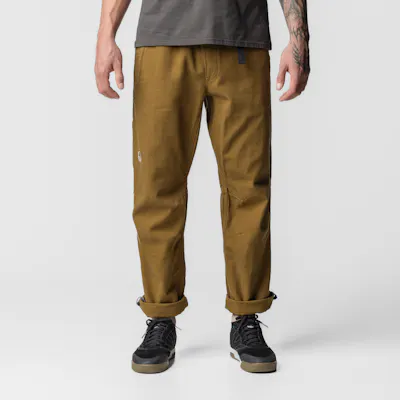
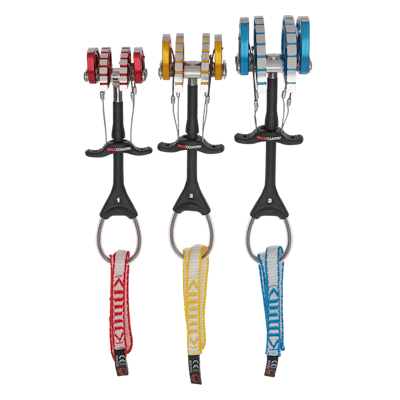
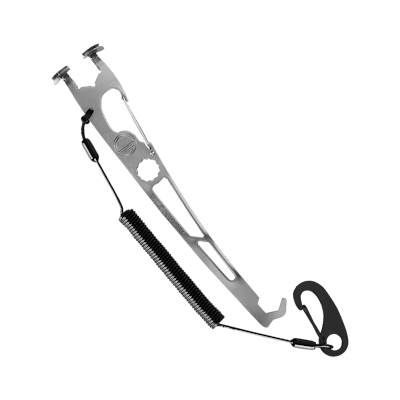
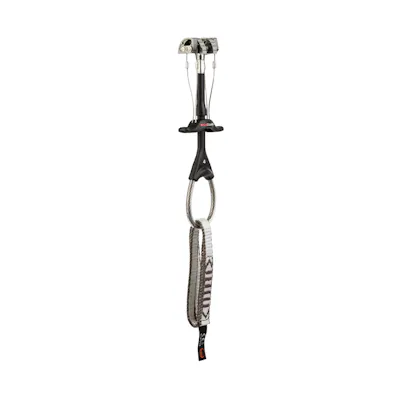
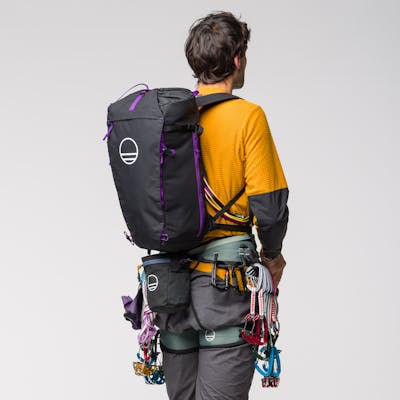
Let’s say for example I’m doing a 24-hour solo project in Yosemite, my standard gear and clothing would look something like: double set of Friends; purple to gold, single blue Friend, micro cams, solo device, jumars, Pro Guide Lite, Adjustable daisy chains, A couple of quickdraws, some snap gates, rope (varying lengths and thicknesses depending on what I’m doing), clothing which varies on temperatures.
What does your packing process look like?
I get my master kit list out before I leave and check it about a million times to make sure I haven’t forgotten anything. I always forget something though, it’s just standard procedure. When I’m packing for the project, I run through the whole project in my mind and what I’ll be doing on each section and list the gear I’ll be using at that specific point. I make sure I have that gear and it all goes into checked luggage. I always feel the most important part of a kit for any climbing trip is your climbing shoes though. Everything else can be replaced one way or another, but your own perfectly worn in climbing shoes are irreplaceable. I always pack my premium pairs of climbing shoes in my hand luggage. You should never trust airports with your most valued piece of trip kit.